
Compartment Food Containers Buying Guide
What is a Compartment Food Container?
The Function of Food Containers with Compartments
Multi Compartment Food Container vs. Single-compartment Food Container
What Should We Consider When Purchasing the Multi Compartment Food Storage Containers?
Compartment Food Containers in Different Materials
- Polypropylene Food Storage Containers
- PET Compartment Food Containers
- Polystyrene / Foam / EPS Compartment Food Containers
- Aluminum Foil Compartment Food Containers
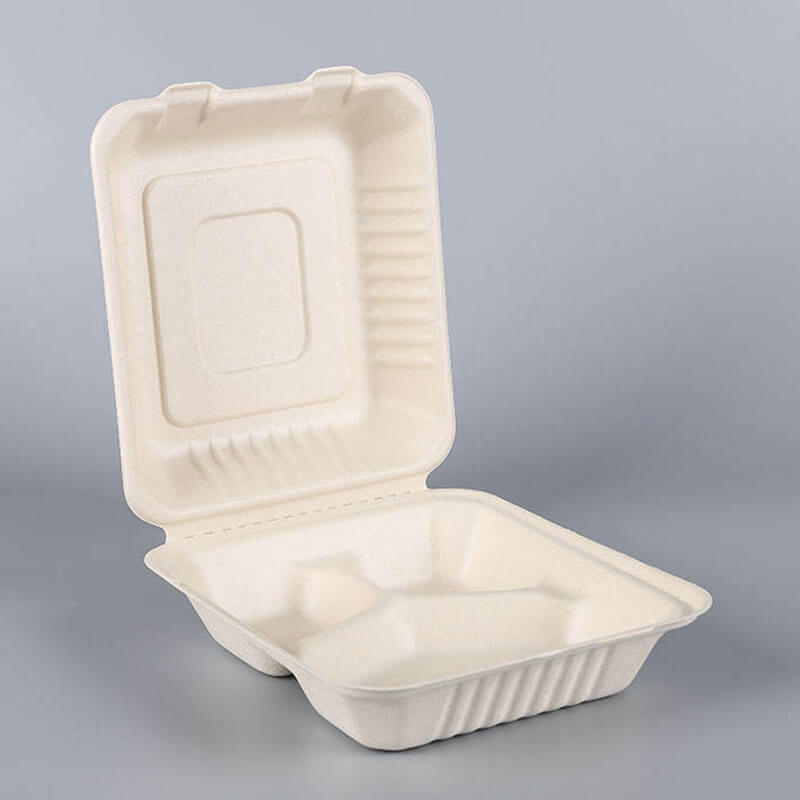
- Sugarcane Fiber Molded Pulp Compartment Food Containers
- PLA Compartment Food Containers
- Coated Paper Compartment Food Containers
- Hybrid Compartment Food Containers (e.g., bagasse base + PET lid)
Recommended Compartment Food Container Styles for Different Scenarios
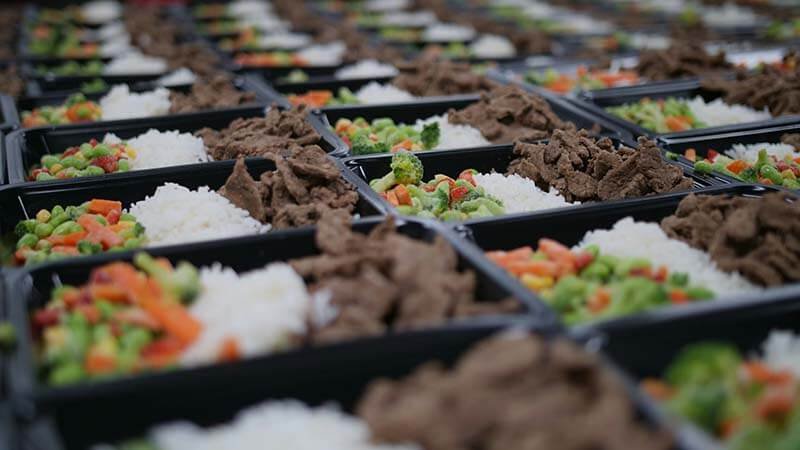
Hi guys, this blog is for everyone who is looking for compartment food containers. If you’re concerned about compartmentalized containers, you can find the answer here.
What is a Compartment Food Container?
A compartment food container is a food storage container with multiple separate sections to keep different foods separate.
Depending on the usage scenario and user, reusable and disposable compartment box is available on the market, and they are made of a variety of different materials.
The Function of Food Containers with Compartments
- Meal prepping: used to separate meals, like meat, vegetables, and grains, prevent them from mixing and absorbing each other’s flavors.
- Portion control: Suitable for people who want to lose weight and reduce fat, it helps control food intake, balance nutrition, and prevent excessive intake.
- Takeout and delivery: used in restaurant takeout or delivery services to prevent food from mixing or leaking during delivery.
- Food storage: used for packing up leftovers so they don’t go to waste. You can also store it in the refrigerator at home.
- Ingredient organization: used to keep the ingredients and make cooking more organized.
- Catering and events: suitable for various buffets, restaurants, and picnics, it allows you to take several different foods at once.
- Snack storage: can be used to store small snacks such as cookies, nuts, and fruits, keeping them separate and easy to access.
Multi Compartment Food Container vs. Single-compartment Food Container
Whatever the material of divided food containers sold on the market, they are generally in 2 forms: multi compartment food container and single compartment food container, let’s look at their respective advantages and disadvantages.
Multi Compartment Food Container
Pros:
- Separate different foods so they don’t mix.
- Maintain the appearance of food.
- Control food portions to prevent overeating of any particular food.
Cons:
- More expensive than single compartment food container.
Single Compartment Food Container
Pros:
- Simple design and less expensive.
- It can hold larger portions of food.
- The first choice for foods that don’t mind being mixed together
Cons:
- It is not suitable to pack different kinds of food together, as their flavors and textures will mix together.
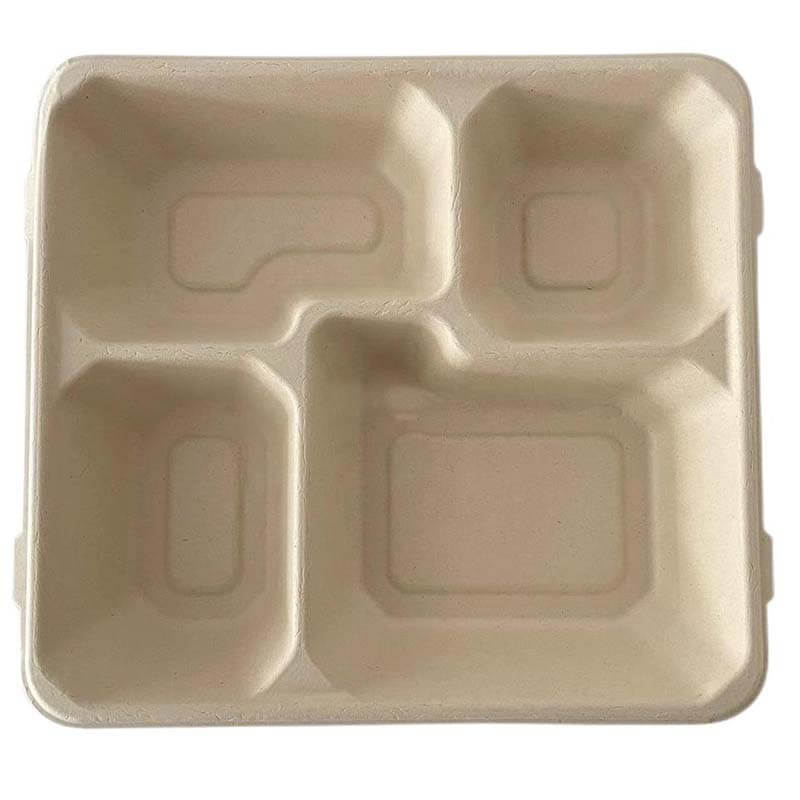
What Should We Consider When Purchasing the Multi Compartment Food Storage Containers?
When you are looking for the multi compartment food storage containers, you need to consider the following factors to decide which food storage container is best for your needs.
Material
The compartment containers sold on the market have many materials, they can be used for different purposes. Here are the materials of divided food container:
Reusable Compartment Food Container Material
- Stainless steel
- Glass
- Plastic
- Silicone
Disposable Compartment Food Container Material
- Polypropylene
- Polyethylene terephthalate
- Polystyrene/foam / EPS
- Aluminum foil/aluminum trays
- Sugarcane fiber molded pulp
- Polylactic acid
- Coated paper
- Hybrid
Lid and seal
Choosing a good quality lid and seal for a divided food storage container is very important. The good quality seal can keep the food fresh and prevent leakage. Looking for the lid with a good quality secure closure ensures your compartment food storage containers will not break upon impact or drop, remaining firmly and securely attached to the container.
Compartment Design and Capacity
- Compartments: Divided food storage containers on the market are typically divided into 1-9 compartments. Choose the appropriate compartments and materials based on the food you want to store.
- Size: The size of the container you choose depends on the amount of food you need to pack.
- Shape: The shape of sectioned food storage containers is generally made in square, rectangular, and round shapes.
Thermal Insulation
When choosing the containers with compartments, the heat retention performance is also a very important factor we need to consider, because we always want our food to maintain its original temperature.
Functionality
You need to check the manufacturer’s instructions to see if the compartment containers you choose are microwave-safe, dishwasher-safe, freezer-safe, and oven-safe. Please check the container itself and the lid.
BPA-free / Food-grade
The divided meal storage containers you choose must be food grade, BPA-free, or have any industry certifications. This depends on the material you choose, you can get this information from the manufacturer’s instructions or check with the manufacturer directly.
Portability
When choosing a divided food container, you should also consider whether its design and size make it easy to carry.
Cleaning and Maintenance
If you want to buy the reusable food containers, you need to consider whether the material you choose is easy to clean, whether it has an odor, and whether it is easy for food residue to remain.
Durability and Warranty
When purchasing reusable containers for food, check the manufacturer’s warranty period and return policy, and prioritize products that offer a one-year or longer warranty.
Environmental Protection/Sustainability
In today’s society, environmental protection requirements are increasingly stringent, and consumers are becoming more environmentally conscious. Therefore, whether the multi compartment food container you buy is made of recyclable materials, whether it supports replaceable sealing rings (to extend its lifespan), and whether it uses biodegradable packaging are all factors you need to consider.
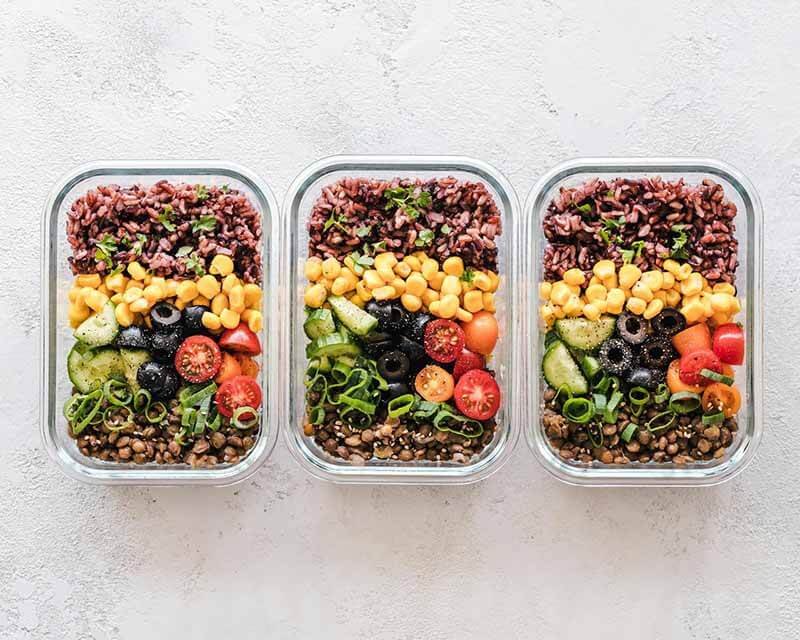
Compartment Food Containers in Different Materials
Here, let’s talk about the divided food containers made in different materials. They can be divided into reusable food containers and disposable food containers.
Reusable Food Containers
The reusable food containers are generally made of 4 materials. Let’s take a look.
Stainless Steel Food Containers
- Compartments: Typically, 1-5 compartments.
- Style: Usually has 2 types, with lid and without lid.
- Use: The stainless steel food containers with lids are typically used by office workers and students to bring their own lunch. The stainless steel food containers without lids are commonly used by office workers and students in company and school cafeterias. Some fast food restaurants, buffet restaurants, and hospital restaurants also use them.
- Pros: Better heat insulation than plastic, microwave friendly (need to remove the lid), good leak prevention effect, easy to clean, durable, and no odor.
- Cons: Heavier than other reusable food containers, higher price than other materials.
Glass Food Containers
- Compartments: Typically, 1-4 compartments.
- Style: The container is made from high borosilicate glass, and the lid is made from polypropylene.
- Use: Suitable for office workers and students to bring their own lunch.
- Pros: microwavable, oven- and fridge-safe option, no odor, durable, high temperature resistance, good leak prevention effect, easy to clean, moderate price.
- Cons: Heavy in weight, fragile, the heat preservation effect is average.
Plastic Food Container
- Compartments: Typically, 1-9 compartments.
- Use: Plastic food container with 5 or fewer compartments are typically used by office workers and students to bring their own lunches. Those with more than 5 compartments are often used to store food items such as fruit, nuts, and small snacks.
- Pros: Light in weight, microwave-safe, low price, durable, low price.
- Cons: Some oil stains are not easy to clean, poor heat preservation effect, slight plastic smell.
Silicone Food Container
- Compartments: Typically, 1-4 compartments.
- Use: Suitable for office workers and students to bring their own lunch.
- Pros: soft, dishwasher-safe, heat-resistant, microwavable, fridge-safe, light in weight, Drop-resistant.
- Cons: Low heat retention, leak-proof effect is average, moderate price, stains easily, and holds onto food smells.
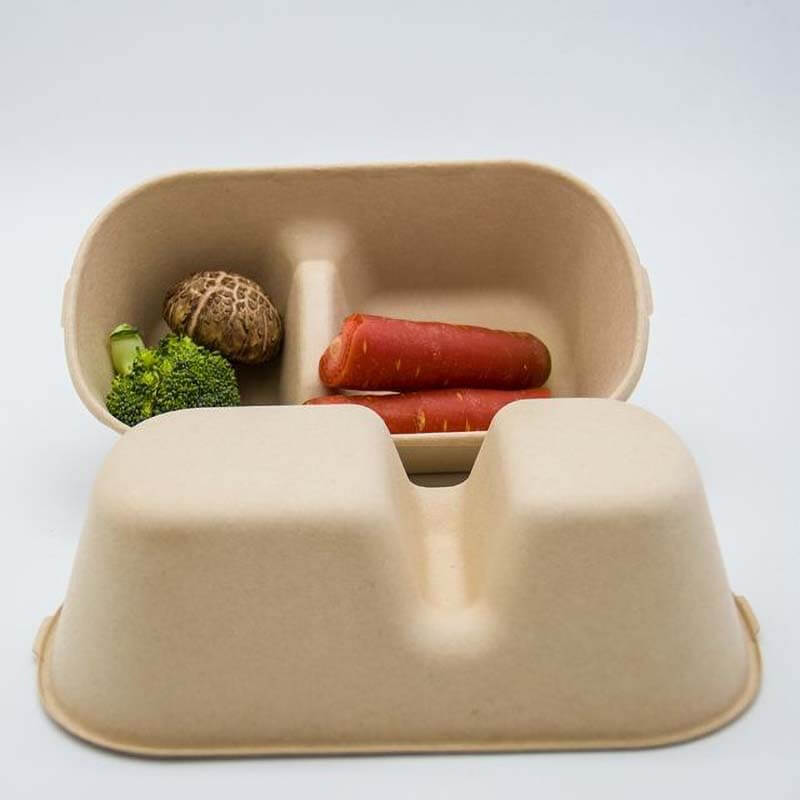
Disposable Food Container
The disposable compartment food containers sold on the market are generally made of 8 materials. Let’s take a look.
Polypropylene Food Storage Containers
- Compartments: Typically, 1-7 compartments.
- Use: Commonly used in fast food restaurants, canteens, and takeout services.
- Pros: microwavable, fridge-safe, heat-resistant, moisture and oil-resistant, low price, leak-resistant, recyclable, can be made in different colors, food grade.
- Cons: Not environmentally friendly, non-biodegradable.
PET Compartment Food Containers
- Compartments: Typically, 1-5 compartments.
- Use: Used to store fruits, nuts, snacks, or food that is not hot.
- Pros: High transparency, fridge-safe, moisture and oil resistant, low price, leak-resistant, recyclable, food grade.
- Cons: Not microwavable, poor heat resistance, easily deformed, not environmentally friendly, and non-biodegradable.
Polystyrene / Foam / EPS Compartment Food Containers
- Compartments: Typically, 1-5 compartments.
- Use: Used for packaging meals in restaurants, fast food outlets, and takeout services.
- Pros: Excellent thermal insulation performance, durable, fridge-safe, moisture and oil-resistant, low price, leak-resistant, food safe.
- Cons: Not microwavable, poor heat resistance, easily deformed by heat, not environmentally friendly, non-biodegradable, and not recyclable.
Aluminum Foil Compartment Food Containers
- Compartments: Typically, 1-4 compartments.
- Use: Used in restaurants and canteens for serving fast food, bento boxes, and for takeout services.
- Pros: Durable, recyclable, fridge-safe, low price, suitable for ovens and steam cabinets, leak-resistant, high temperature resistant, oil-resistant, waterproof, moisture-proof, food-grade, and with good heat insulation properties.
- Cons: Not microwavable, non-biodegradable.
Sugarcane Fiber Molded Pulp Compartment Food Containers
- Compartments: Typically, 1-6 compartments.
- Use: Used for serving and packaging food in restaurants, canteens, and takeout.
- Pros: Durable, recyclable, fridge-safe, suitable for ovens and steam cabinets, leak-resistant, high temperature resistant, oil-resistant, waterproof, moisture-proof, food-grade, and with good heat insulation properties, microwavable, biodegradable, and compostable.
- Cons: Higher cost than plastic.
PLA Compartment Food Containers
- Compartments: Typically, 1-6 compartments.
- Use: Used for serving and packaging food in restaurants, canteens, and takeout.
- Pros: Durable, technically recyclable, fridge-safe, leak-resistant, oil-resistant, waterproof, moisture-proof, food-grade, biodegradable, compostable.
- Cons: Not microwavable, not resistant to high temperatures, and poor heat insulation.
Coated Paper Compartment Food Containers
- Compartments: Typically, 1-2 compartments.
- Use: Suitable for packaging light meals, fruits, and other non-greasy foods with plenty of broth.
- Pros: Microwavable, leak-resistant, oil-resistant, waterproof, resistant to high temperatures, food-grade.
- Cons: Not fridge-safe, not recyclable, not biodegradable, not compostable, poor heat insulation.
Hybrid Compartment Food Containers (e.g., bagasse base + PET lid)
The hybrid compartment food container is also one of the disposable compartment food containers that is designed to carry multiple food items separately, just the container and lid use different materials. About the feature of such a container, you can refer to the above material feature, depending on the container you choose.
Recommended Compartment Food Container Styles for Different Scenarios
The choice of which type of divided food containers to use depends on your specific needs; here are some suggestions.
Office Commuters & Students
- 2 compartment food containers
- 3 compartment food containers
- 4 compartment food containers
- Material: stainless steel, glass, plastic, and silicone reusable food containers
Children’s Lunches
- 3 compartment food containers
- 4 compartment food containers
- 5 compartment food containers
- Material: stainless steel and silicone reusable food containers are your first choice.
Meal Preppers / Fitness
- 3 compartment food containers
- 4 compartment food containers
- Material: stainless steel, glass, plastic, and silicone reusable food containers
Picnic / Camping
- 2 compartment food containers
- 3 compartment food containers
- 4 compartment food containers
- 5 compartment food containers
- 6 compartment food containers
- 7 compartment food containers
- 8 compartment food containers
- 9 compartment food containers
- Material: stainless steel and plastic reusable food containers
Fast-food Chains
- 2 compartment food containers
- 3 compartment food containers
- 4 compartment food containers
- 5 compartment food containers
- 6 compartment food containers
- 7 compartment food containers
- Material: PP, bagasse, PLA disposable multi compartment food container
Chinese Restaurants & Hot-food Takeout
- 2 compartment food containers
- 3 compartment food containers
- 4 compartment food containers
- 5 compartment food containers
- 6 compartment food containers
- 7 compartment food containers
- Material: PP, bagasse, PLA disposable multi compartment food container
Delis & Salad Bars / Ready-meals Counters
- 2 compartment food containers
- 3 compartment food containers
- 4 compartment food containers
- Material: PP, PET, bagasse, PLA, Coated Paper disposable multi compartment food container
Supermarkets
- 2 compartment food containers
- 3 compartment food containers
- 4 compartment food containers
- Material: PP, PET, bagasse, PLA, disposable multi compartment food container
FAQ
Can I use the multi compartment food container to reheat the food?
Only if the container explicitly states “microwave-safe.” Usually, lids should be removed or vented. So, you need to check the manufacturer’s temperature limits.
Which single-use compartment container is best for hot, oily Chinese food?
Aluminum trays, bagasse, or high-temp PP compartment containers are commonly used.
Are compostable containers truly eco-friendly?
They can be, if your local waste system supports industrial composting. Otherwise, they usually end up in landfill where compostable claims offer limited benefit.
Can multi compartment food container really prevent flavor transfer?
If each compartment has its own independent sealing structure and the material does not easily absorb odors (such as stainless steel or glass), it can significantly reduce flavor transfer. However, if strongly scented foods are stored for a long time, a small amount of odor crossover may still occur.
Can meals with soup or liquids be stored in divided food containers?
Only if the product is clearly labeled as “100% leakproof for each compartment” and has been tested for it. Most multi-compartment containers can handle small amounts of sauce or moisture, but you should not pour soup to the top or place the container sideways unless leakproof performance is explicitly guaranteed.
Are meal prep food containers dishwasher-safe?
It depends on the material and the manufacturer’s specifications. Even if a container is labeled “dishwasher safe,” high temperatures and strong water pressure may speed up gasket aging. To extend the lifespan, it is recommended to hand-wash the sealing ring separately.
How many compartments should I choose?
3 compartments are the most popular type. The compartment amounts should depend on your specific needs.
How to choose the disposable compartment food containers?
It depends on your considerations. If you want something economical and functionally complete, then PP material is a good choice. If you prioritize environmental protection, then bagasse material is the best option.
What forms do compartment food containers come in?
They generally come in two main forms.
Separate-lid containers – the lid and the base are two individual pieces, commonly used for takeout meals and microwaveable trays.
Clamshell containers – the lid is attached to the base with a hinge, allowing the container to open and close like a shell. This type is widely used for takeout, fast food, and grab-and-go meals.
You can find more comparisons and analyses of disposable food packaging here.
You may also be interested in:
John Q
John Q is Eco March’s Product Manager. With 5 years of prior experience in the food industry after graduating from university, he has been an integral part of Eco March. He excels in creating and developing eco-friendly food packaging products with a keen focus on enhancing the consumer experience.


