
Are Sugarcane Plates the Top Choice for Disposable Plates?
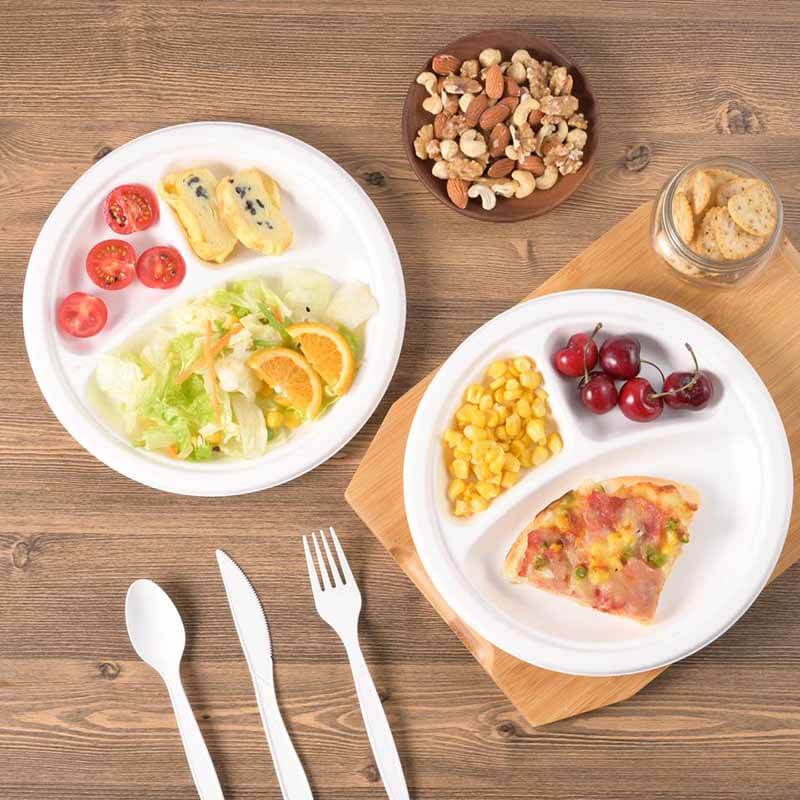
Sustainability cannot be just a slogan, we should take action to make it possible by individuals, companies, regions, and countries. The disposable plates have long been a necessity in restaurants, at home, and events, but the environmental issues caused by plastic and foam are very serious, so businesses and consumers are turning to more eco friendly alternatives.
One of the options: sugarcane plates, which are made from the byproduct of sugarcane processing, are becoming more and more popular. But are sugarcane plates the best option among all the disposable plates? In this blog, we will explore the characteristics, benefits, and disadvantages of bagasse plates, and we will compare them with other disposable plates made from other materials. After reading this article, you will be 100% sure which material is your best choice for sustainable, high-quality disposable plates.
What are Disposable Plates?
Disposable plates are single-use food service dinner plates. As an important part of modern dining, these plates provide convenience and practicality for both casual dining and large events. Due to they do not need to be washed after use, you can throw them away directly, so the waste caused by disposable plates is a huge problem, and the material of the plates determines whether the problem becomes worse or develops in a sustainable way.
There are several types of disposable plates, each of which is made from different materials, and each of them has its own benefits and disadvantages. The most commonly seen materials are plastic, foam, bagasse, palm leaf, paper, bamboo, and wheat straw. Following, we will introduce the characteristics of each plate type, then you will know clearly which material is the future of disposable tableware and which type is suitable for your current needs.
What are Sugarcane Plates?
Sugarcane plates are the eco friendly alternatives to the traditional disposable tableware, they are made from bagasse, which is the fibrous byproduct of sugarcane. Bagasse has long been made into various products due to its durability and environmental protection. The biodegradable plates made from bagasse also have a significant traction in recent years, due to the call for a global sustainable development strategy.
Sugarcane Plates vs. Other Disposable Plates
When choosing the disposable plates for your needs, you need to consider their sustainability, durability, cost, and functionality. Here, we will make a comparison of disposable plates made from different materials to help you understand their performance and their impact on the environment.
Sugarcane Plates vs. Plastic Plates
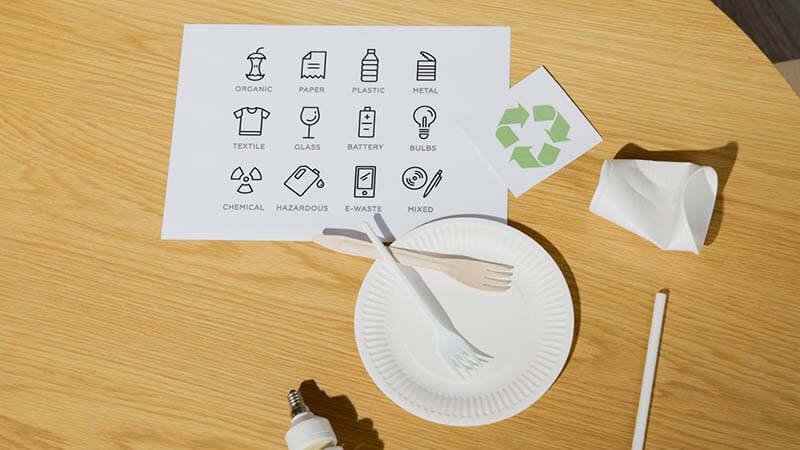
- Environmental Impact: Plastic plates are always the most widely used disposable plates in the past, but the material is made from petroleum-based materials, it is not biodegradable, and take hundreds of years to break down, so the white pollution caused by the disposable plastic plates is very serious. However, the sugarcane plates are made from 100% natural materials, so they are biodegradable and compostable, a sustainable solution against white pollution.
- Durability: Plastic plates are strong and resistant to liquids and oils. But this material can become brittle or deform when used with hot foods. The sugarcane plates are slightly less flexible, but they are still durable and resistant to moisture, grease, and high temperatures, making this material a good choice to serve various foods.
- Reusability: Although the plastic plate and the bagasse plate are disposable, the plastic plate can still be washed if you handle it properly.
- Cost: Plastic plates are always more affordable, but their environmental cost is very high. While sugarcane plates are a bit more expensive, they are eco-friendly to our environment.
- Size and Shape: Both plastic and sugarcane are highly customizable raw materials, you can customize disposable plates into any size and shape by these two materials.
- Color and Pattern: Both the plastic and sugarcane plates can be customized with various colors and patterns on the surface.
Sugarcane Plates vs. Paper Plates
- Environmental Impact: The paper plates are generally made from wood pulp, which is definitely biodegradable. But the paper plates always have a coating to improve their durability, and the coating is always a threat to composting. Sugarcane plates are made from bagasse fiber, which is renewable and biodegradable. These plates don’t need any harmful coatings and can break down very quickly.
- Durability: The paper plate is weaker than the sugarcane plate, it is easy to become soggy or break apart when exposed to wet or hot foods. Sugarcane plates are more sturdy, can handle heavier foods and oily foods, without losing their shape.
- Reusability: Both of the sugarcane and paper plates are single-use, can not be used twice.
- Cost: Paper plates are generally cheaper than sugarcane plates, but the disposable paper plates can not offer the same strength and environmental benefits as sugarcane.
- Size and Shape: The size of sugarcane and paper plates can be customized according to specific needs. In terms of shape plasticity, paper plates are not as plastic as bagasse plates.
- Color and Pattern: Both disposable plates can be customized in color and pattern.
Sugarcane Plates vs. Foam Plates
- Environmental Impact: The foam plates are made from expanded polystyrene, which is durable and lightweight, but the environmental issue caused by this material is serious. This material is not recyclable, not easy to decompose, even foam plastics that are invisible to the naked eye can remain in the environment and cause harm to the environment. Bagasse plates are entirely biodegradable and compostable.
- Durability: Foam is well known for its insulation properties, so disposable plates made from foam can keep the food warm and have a certain load-bearing capacity, so the foam plates can serve a large amount of food, but you still need to be mindful of food portions, too much pressure will also lead the foam to break. Sugarcane plates are also durable, can serve both for hot and cold food, but the insulation effect is not as good as foam plates.
- Reusability: Both foam plates and bagasse plates cannot be reused.
- Cost: Foam Plates are the cheapest material among all the disposable plates, but their environmental cost is high. Considering this, the bagasse plates can provide better long-term value.
- Size and Shape: The size of both plates can be customized. In terms of shape, the customization flexibility of foam plates is not as high as that of bagasse plates.
- Color and Pattern: The flexibility of color and pattern customization on foam plates and sugarcane plates is high.
Sugarcane Plates vs. Palm Leaf Plates
- Environmental Impact: Both palm leaf plates and sugarcane plates are made from renewable and natural materials, so these two plates are environmentally friendly.
- Durability: Palm leaf plates are sturdier and more durable than sugarcane plates. The palm leaf plates can even hold wet foods for a longer time. But, at this point, the sugarcane plates are a little bit weaker.
- Reusability: Although the palm leaf plates and bagasse plates are designed for single use, due to the palm leaf plates are sturdier, many people will wash, dry, and reuse them.
- Cost: The price of palm leaf plates will be higher than that of sugarcane type.
- Size and Shape: The size can be customized for both materials. The flexibility of shape customization of palm leaf plates is not as high as sugarcane plate, it is more complex and takes a long time.
- Color and Pattern: Palm leaf plates generally do not have too many colors and patterns, because each plate has its specific color and pattern according to the different palm leaves. For sugarcane plates, you can customize any color and pattern you want on their surface.
Sugarcane Plates vs. Bamboo Plates
- Environmental Impact: Both the bamboo plates and sugarcane plates are made from renewable materials, so they are friendly to our environment. But, due to different manufacturing processes, some bamboo plates use the binding agents, then these bamboo plates are not wholly eco friendly.
- Durability: The sugarcane plates are sturdy and can hold both cold and hot food, but the bamboo plates are more durable than the sugarcane plates.
- Reusability: Both disposable bamboo plates and disposable sugarcane plates are designed for single use, but if you handle the bamboo plates properly, they can be reused.
- Cost: The price of bamboo plates will be higher than the sugarcane plates, due to the raw material and the process of production.
- Size and Shape: The size of bamboo plates can be customized, but their shape are usually relatively simple. Sugarcane plates are highly customizable in sizing and shaping.
- Color and Pattern: The color and pattern for bamboo plates are relatively simple, generally use their original color and pattern. Sugarcane Plates can be customized with various patterns.
Sugarcane Plates vs. Wheat Straw Plates
- Environmental Impact: Both the sugarcane plates and wheat straw plates are made from the byproduct of a natural plant, so they are all biodegradable and compostable.
- Durability: The sugarcane plates are more durable and sturdy than wheat straw plates, especially when holding wet, heavy, and oily foods.
- Reusability: Both two plates are single use, not sturdy enough for second use.
- Cost: The price of sugarcane plates and wheat straw plates is generally the same. Sometimes the price of bagasse plates may be a little bit lower than wheat straw ones.
- Size and Shape: Both sugarcane and wheat straw plates can be customized in different sizes and shapes.
- Color and Pattern: According to each specific need, you can ask to customize the color, pattern, brand, and logo on sugarcane and wheat straw plates.
As a result, we have reasons to believe that sugarcane plates are the top and best choice for disposable plates, since they are biodegradable, compostable, affordable, sturdy, and highly customizable.
Application of Sugarcane Plates
More and more organizations and events tend to use bagasse plates for their food service. More and more school canteens are changing their plastic plates to sugarcane plates. Any place that needs food service must need such compostable plates, so their application includes, but is not limited to:
- Restaurants and Cafés
- Catering Services
- School and University Canteens
- Employee Dining Areas
- Public Gatherings
- Parties and Picnics
Eco March is the manufacturer of sugarcane plates in China, and we support customized requests. If you are interested, feel free to contact us to get the wholesale price Today!
You may also be interested in:
Your guide to disposable dinner plates for different events

John Q
John Q is Eco March’s Product Manager. With 5 years of prior experience in the food industry after graduating from university, he has been an integral part of Eco March. He excels in creating and developing eco-friendly food packaging products with a keen focus on enhancing the consumer experience.


