
The Complete Guide to Compostable Takeout Containers
What Are Compostable Takeout Containers?
What Are the Recognized Standards for Compostable Materials?
How Do Compostable To Go Containers Work After Disposal?
- Disposal into the Correct Waste Stream
- Exposure to Composting Conditions
- Physical Breakdown
- Biological Decomposition
- Final Compost Output
Compostable vs. Biodegradable vs. Plastic: End-of-Life Comparison
Types of Compostable To Go Food Containers
- Bagasse Containers
- Bamboo Fiber Containers
- Recycled Paper Pulp Containers
- PLA Containers
- CPLA Containers
- Palm Leaf Containers
- Wheat Straw Fiber Containers
How to Choose the Most Suitable Compostable To Go Containers?
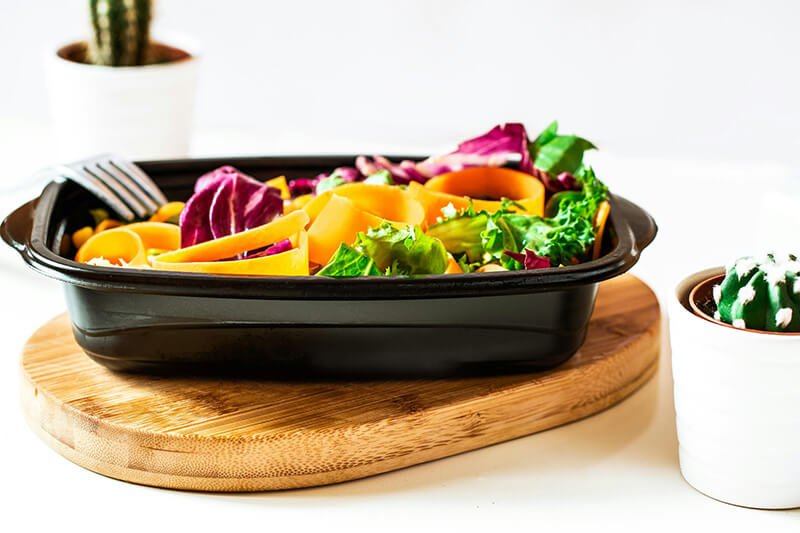
Compostable takeout containers have become a core packaging solution for restaurants, cafes, food manufacturers, and retailers, helping them reduce plastic waste while meeting sustainable environmental requirements. However, not all compostable carryout containers are created equal, they differ significantly in materials, performance, certifications, and cost. This blog will comprehensively compare the various performance characteristics of different compostable take out containers available on the market, helping you choose the most suitable solution for your needs.
What Are Compostable Takeout Containers?
Compostable takeout containers are food packaging products designed to fully break down into natural elements within a defined timeframe under composting conditions, leaving no toxic residue. These natural elements include water, CO₂, and organic matter.
What Are the Recognized Standards for Compostable Materials?
- ASTM D6400 (United States)
- BPI (United States)
- EN 13432 (European Union)
- OK Compost Industrial(Global)
- OK Compost Home(Global)
How Do Compostable To Go Containers Work After Disposal?
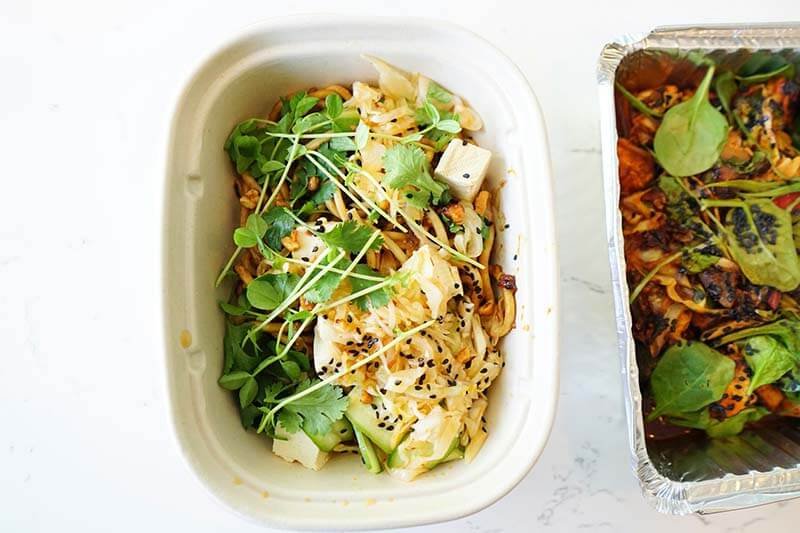
If you want to compost the container properly, you can not throw the food container into recycling bins or landfill, you need to put it into a composting facility. Here is how they work after disposal.
Disposal into the Correct Waste Stream
The compostable takeout container must be placed into industrial composting bins or approved municipal organic waste programs, this is the only way they can be completely composted.
Exposure to Composting Conditions
Under industrial composting conditions, the compostable to go food containers must be exposed to the following environmental conditions:
- Temperatures of 55–65°C (131–149°F)
- Controlled moisture levels
- Oxygen (aerobic environment)
- Active microorganisms (bacteria and fungi)
Physical Breakdown
Under these composting conditions, fiber-based containers will soften and decompose. Bio-based plastic containers will lose their structural integrity and then break down into small organic particles.
Biological Decomposition
Microorganisms will break down these fragmented materials into carbon dioxide, water, and organic matter. If these disposable food containers are properly certified, they will not produce any toxic residues or microplastics in such a composting environment.
Final Compost Output
After a complete composting process, which takes approximately 90-180 days, these materials will be transformed into nutrient-rich compost that can be used for:
- Improving soil structure
- Promoting plant growth
- Applications in agriculture and landscaping
You may also be interested in this Compostable Products Guidance Document explaining real-world composting acceptance and requirements.
Compostable vs. Biodegradable vs. Plastic: End-of-Life Comparison
| Packaging Type | Needs Industrial Composting | Breaks Down Fully | Leaves Microplastics | Typical Timeframe |
| Certified Compostable Containers | Yes | Yes | No | 3-6 month |
| Home-Compostable Containers | No | Yes | No | 6-12 month |
| Biodegradable Containers | No clear standard | Often incomplete | Possible | Years |
| Conventional Plastic Containers | No | No | Yes | Hundreds of years |
Types of Compostable To Go Food Containers
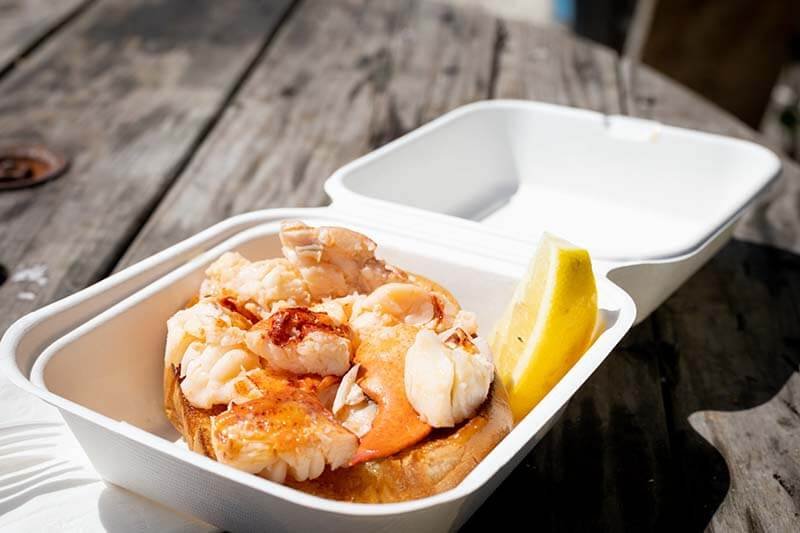
When we talked about the to go food containers in compostable materials, there are a few more types.
Bagasse Containers
Bagasse containers are made from sugarcane fiber, which is the agricultural waste after juice extraction.
Common Formats
Sugarcane fiber can be made into many different products, but when it’s related to food packaging materials, this material is generally made into:
- Clamshell containers
- Compartment food containers
- Plates and bowls
- Cups
Key Features
- Naturally rigid
- Heat resistant
- Suitable for hot and cold foods
- Microwave safe
- Freezer safe
- Oil and grease resistant
- Water resistant
- No plastic coating
- Made from renewable agricultural waste
- Widely accepted in industrial composting facilities
Limitations
- Not transparent
- Prolonged contact with liquids will cause it to soften.
Typical Application Scenarios
- Fast food & quick-service restaurants
- Asian cuisine, BBQ, fried foods
- Cafeterias and catering
- Airline and institutional meals
Bamboo Fiber Containers
Bamboo fiber containers are made from bamboo, which is a fast-growing and renewable type of grass that can be harvested without damaging its root system.
Common Formats
- Clamshells
- Trays
- Bowls
- Compartmentcontainers
Key Features
- Good rigidity
- Good structural strength
- Good heat resistance
- Suitable for hot and cold foods
- Microwave safe
- Freezer safe
- Oil and grease resistant
- Water resistant
Limitation
- Not transparent
- Not suitable for long liquid storage
Typical Application Scenarios
- Deli counters
- Supermarkets
- Prepared meals
- Event catering
Recycled Paper Pulp Containers
Recycled paper pulp containers are made from processed, wet paper fibers blended with water, then molded into specific shapes.
Common Formats
- Trays
- Boxes
- Clamshells
Key Features
- Low cost
- Suitable for cold and hot foods
- Microwave safe
- Freezer safe
Limitation
- Moisture sensitivity
- Not transparent
- Less durable
Typical Application Scenarios
- Deli counters
- Supermarkets
- Restaurants
- Stores
- Schools
- Catering
PLA Containers
PLA containers are made from Polylactic Acid, a compostable bioplastic derived from corn starch or sugarcane.
Common Formats
- Clear food containers
- Salad bowls
- Cold drink cups
Key Features
- Transparent
- Smooth surface
- Freezer safe
- Oil and grease resistant
- Water resistant
- No plastic coating
Limitation
- Low heat resistance
- Requires industrial composting
- Not suitable for hot foods
Typical Application Scenarios
- Cold salads
- Fruit cups
- Desserts
- Cold deli items
CPLA Containers
CPLA containers are made from Crystallized Poly Lactic Acid, which is also a bioplastic derived from corn starch or sugarcane. But this material is heat-resistant, ideal for hot food and drinks.
Common Formats
- Various cutlery
- Hot cups and lids
Key Features
- Higher heat resistance than PLA
- Opaque appearance
- Freezer safe
- Oil and grease resistant
- Water resistant
- No plastic coating
- Microwave safe
Limitation
- Less flexible than conventional plastics
- Still requires industrial composting
Typical Application Scenarios
- Restaurants
- Schools & University
- Catering
- Beverage Shops
Palm Leaf Containers
Palm leaf containers are made from naturally fallen sheaths of the Areca palm tree, they are heat pressed into various shapes of food containers.
Common Formats
- Plates
- Bowls
- Trays
Key Features
- Thick
- Rigid
- Natural texture
- No chemicals or additives
- Oil and grease resistant
- Water resistant
- Heat resistant
- Freezer safe
- Microwave safe
Limitation
- Limited shapes
- Higher cost
Typical Application Scenarios
- Eco-premium catering
- Events and weddings
- Sustainable branding concepts
Wheat Straw Fiber Containers
Wheat straw fiber containers are food containers made from the stalk byproducts after wheat harvesting.
Common Formats
- Clamshells
- Trays
- Bowls
- Plates
- Cups
Key Features
- Similar to bagasse
Limitation
- High cost
Typical Application Scenarios
- Takeout meals
- Institutional dining
- Sustainable foodservice programs
How to Choose the Most Suitable Compostable To Go Containers?
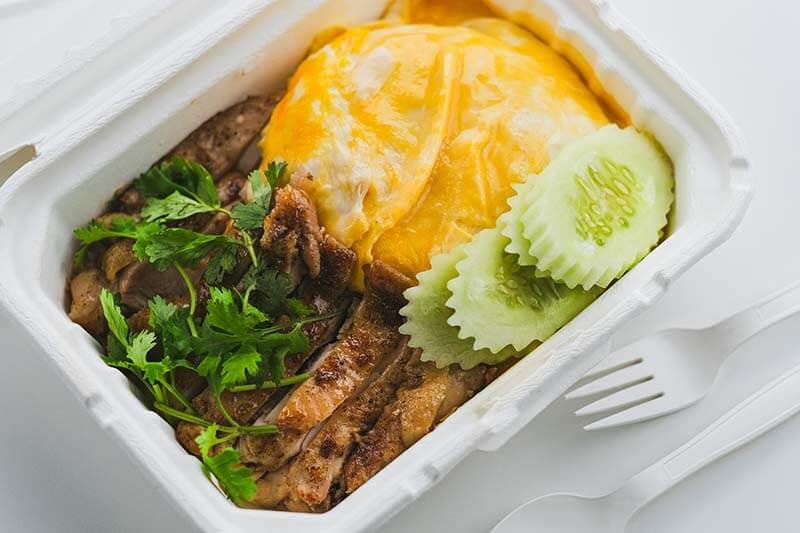
Choosing the right compostable takeout container depends on its intended use. Below is a comparison ranking of common compostable take out containers available on the market.
Water & Oil Resistance
CPLA Containers>PLA Containers>Palm Leaf Containers >Bagasse Containers>Bamboo Fiber Containers>Wheat Straw Fiber Containers>Recycled Paper Pulp Containers
Heat Resistance & Hot Food Performance
Palm Leaf Containers>CPLA Containers >Bagasse Containers>Bamboo Fiber Containers>Wheat Straw Fiber Containers>Recycled Paper Pulp Containers>PLA Containers
Structural Strength & Durability
Palm Leaf Containers>CPLA Containers >Bagasse Containers>Bamboo Fiber Containers>Wheat Straw Fiber Containers>PLA Containers >Recycled Paper Pulp Containers
Compostability & Environmental Impact
Palm Leaf Containers>Bagasse Containers>Wheat Straw Fiber Containers>Bamboo Fiber Containers>>Recycled Paper Pulp Containers>PLA Containers>CPLA Containers
Appearance & Branding Appeal
Palm Leaf Containers>PLA Containers>CPLA Containers>Bagasse Containers>Bamboo Fiber Containers>Wheat Straw Fiber Containers>Recycled Paper Pulp Containers
Cost Efficiency
Bagasse Containers>Recycled Paper Pulp Containers>PLA Containers>CPLA Containers> Wheat Straw Fiber Containers>>Bamboo Fiber Containers>Palm Leaf Containers
FAQ
Are compostable takeout containers microwave-safe?
This depends on materials. For example, the bagasse takeout containers are microwave-safe, but PLA is not.
Can compostable containers go into regular trash?
They can, but for composting purposes, they need to go into the industrial composting facility.
Do compostable containers break down in landfills?
No. Landfills lack oxygen and microbes needed for composting.
Are compostable containers PFAS-free?
Not all compostable containers are PFAS-free; you need to check with the supplier.
John Q
John Q is Eco March’s Product Manager. With 5 years of prior experience in the food industry after graduating from university, he has been an integral part of Eco March. He excels in creating and developing eco-friendly food packaging products with a keen focus on enhancing the consumer experience.


