
The Complete Guide to Biodegradable Food Packaging
What is Biodegradable Food Packaging?
What are the Materials Used in Biodegradable Food Packaging?
- Bagasse (sugarcane fiber)
- PLA / Other Bioplastics
- Paper/Wood/Pulp-based (paper pulp, bamboo fiber, wood pulp)
- Cellulose films (e.g. cellophane-type, regenerated cellulose)
- Wheat Straw Fiber
- Seaweed-Based Packaging
- Mushroom (Mycelium) Packaging
What is the Advantage of Biodegradable Packaging for Food?
How to Choose the Right Biodegradable Food Packaging?
Biodegradable Packaging vs Traditional Plastics
The Misconception About Biodegradable
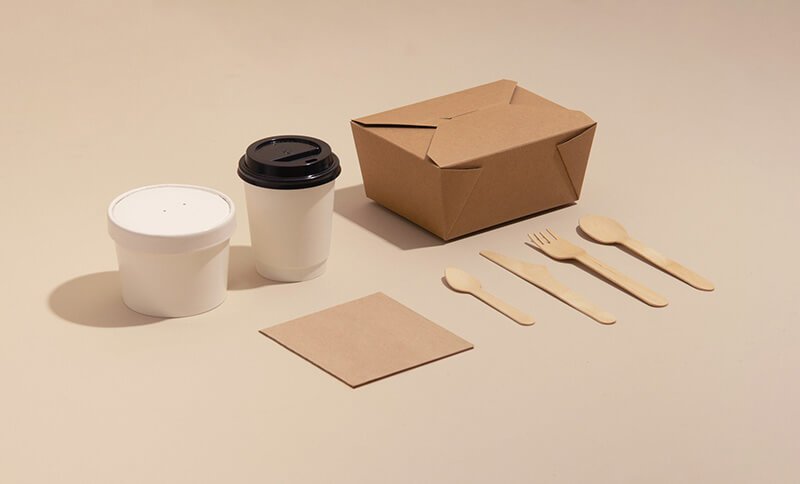
With social development and progress, the demand for environmental protection and consumers’ environmental awareness is becoming increasingly strong. Food packaging is an unavoidable topic. Today, we’ll discuss biodegradable food packaging. Whether you’re a consumer, a restaurant owner, or a packaging buyer, this blog will be a valuable, comprehensive reference.
What is Biodegradable Food Packaging?
Biodegradable food packaging is a type of food packaging material that can naturally break down over time through the action of microorganisms, leaving water, carbon dioxide, and biomass.
Biodegradable vs. Compostable
Don’t confuse the concepts of biodegradable and compostable. Please do remember that all compostable food packaging is biodegradable, but biodegradable food packaging is not always compostable.
Currently, there’s no global standard for biodegradable. But all compostable food packaging must pass a series of strict tests to ensure the packaging material can break down within a specific time and under a specific composting condition, without leaving any harmful residue. This is why we say compostable packaging material is 100% biodegradable.
What are the Materials Used in Biodegradable Food Packaging?
There are various materials that can be used to produce biodegradable food packaging, let’s take a look at what they are and their features:
Bagasse (sugarcane fiber)
- Uses: disposable trays, clamshell containers, takeout boxes, sugarcane cups, sugarcane bowls & plates
- Features: Renewable, plant-based, good heat/hot-food resistance, microwave-safe, compostable in right conditions
- Limitation: Needs industrial composting — otherwise degrades slowly or not at all; barrier/grease resistance may be limited
PLA / Other Bioplastics
- Uses: cups, containers, and other clear packaging
- Features: similar feel to plastic, compostable under specific conditions, lower carbon footprint vs fossil-plastic
- Limitation: low heat tolerance, needs a proper compost environment
Paper/Wood/Pulp-based (paper pulp, bamboo fiber, wood pulp)
- Uses: packaging wrap, bowls, boxes, bags, trays for dry foods
- Features: renewable, biodegradable
- Limitation: Usually weaker barrier to moisture/grease, may require coatings (which may reduce biodegradability), limited durability for hot or wet foods
Cellulose films (e.g. cellophane-type, regenerated cellulose)
- Uses: wraps, bags, film overlays
- Features: biodegradable and derived from biomass, offers transparency similar to plastic film
- Limitation: moisture/vapor permeability may be high
Wheat Straw Fiber
- Uses: takeout boxes, plates, bowls, cutlery
- Features: made from agricultural waste, heat-resistant, sturdy, compostable, low additive needs, microwave- and freezer-safe
- Limitation: not transparent, may require coating for moisture and oil resistance, and the material itself is brittle.
Seaweed-Based Packaging
- Uses: Edible films, produce wraps, dry-food sachets, and biodegradable food containers
- Features: biodegradable & compostable, renewable, edible & water-soluble, minimal resource use, moisture- and grease-resistant, heat-resistant
- Limitation: low tensile strength, Low durability, highly soluble in water, high cost
Mushroom (Mycelium) Packaging
- Uses: Protective packaging, trays, foam-replacement
- Features: home compostable, impact resistance, lightweight, insulating, water-resistant, grows from waste, customizable molds
- Limitation: higher cost, limited suppliers, sensitivity to moisture
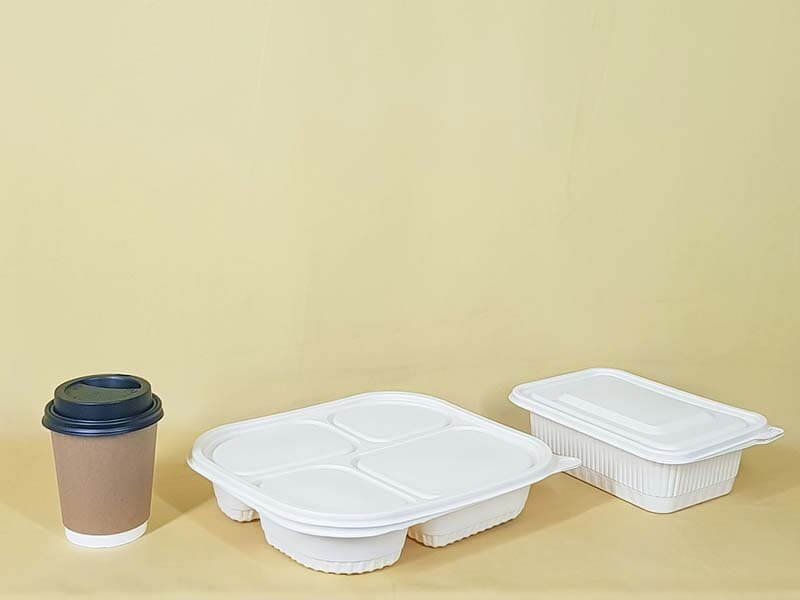
What is the Advantage of Biodegradable Packaging for Food?
Why are we increasingly favoring biodegradable food packaging? Let’s look at its advantages.
Reduced Reliance on Fossil-Fuel Plastics & Lower Carbon Footprint
In the past, many food packaging materials were made from petroleum-based plastics, which were very environmentally unfriendly. Now, these biodegradable packaging materials are made from renewable plant-based raw materials, which greatly alleviates environmental pressure and reduces the carbon footprint.
Lower Long-Term Environmental Impact
If we can compost these biodegradable packaging materials in an industrial composting facility, the biodegradable packaging can return to the soil as compost. Unlike other packaging materials, which remain in the soil for hundreds of years. Even in cases of improper handling, biodegradable materials pose a lower long-term chemical risk than plastics.
Reduced Chemical Risk to Food & Consumers
Most of the biodegradable food packaging materials are from agricultural products, so all of them are from natural fiber. But traditional plastic food packaging contains many chemical additives, this is harmful to the food.
New Marketing & Consumer Appeal
Consumers are becoming increasingly environmentally conscious, and restaurants are launching their own food packaging containers, takeout services are using biodegradable food containers as a selling point for companies and restaurants. Therefore, it is precisely consumer demand that is driving the development of eco-friendly food packaging.
Various Material Options for Different Uses
Biodegradable food packaging materials come in various materials, it can be bagasse, bamboo, wood, wheat straw, bioplastics, etc. Businesses and consumers can choose the packaging material depending on their needs.
Reduces Landfill Waste
Unlike traditional plastic food packaging, biodegradable food packaging is broken down by microorganisms into basic components such as carbon dioxide and water under suitable conditions. This greatly reduces the pressure on landfills and reduces pollution to the oceans and waterways.
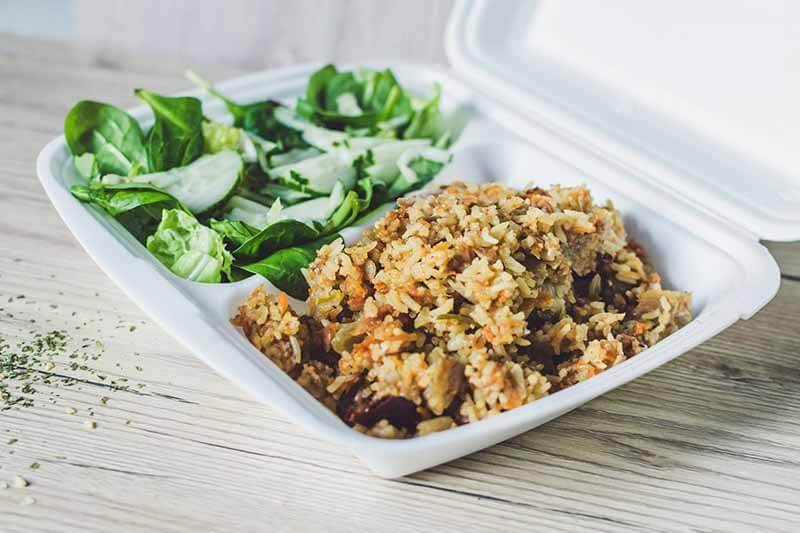
What are the Challenges of Using Biodegradable Packaging?
While we understand the benefits that biodegradable food packaging brings to our lives and the environment, we also face the challenges posed by this packaging material. Let’s take a look.
The Level of Infrastructure Perfection
Biodegradable or compostable food packaging requires sophisticated industrial composting facilities to degrade completely within a reasonable timeframe. Without these facilities, even biodegradable packaging will eventually end up in landfills, where degradation is extremely slow. Furthermore, landfill environments lacking oxygen can produce methane, negatively impacting the climate, human health, and crops.
Performance Limitations
While using biodegradable food packaging to replace plastic packaging, we must be aware that in many aspects of performance, biodegradable packaging is inferior to plastic packaging. For example, its heat resistance, moisture resistance, and barrier properties. Therefore, it depends on what kind of food you are using biodegradable packaging to hold; in most cases, biodegradable food packaging is perfectly fine.
Cost & Supply Chain Constraints
The production cost of biodegradable food packaging is higher than that of traditional plastic food packaging. Therefore, price-sensitive markets or small businesses may not choose this type of packaging.
Furthermore, many manufacturers are vying for this market share but producing substandard products. Their packaging is not actually biodegradable, their advertising is false, and these products offer no benefit to improving environmental quality.
Food Waste Negates the Benefits of Biodegradable
Some biodegradable food boxes with poor barrier properties can cause food spoilage, leakage of oil or water, or spillage of sauces, leading consumers to discard the food and resulting in food waste. This food waste also impacts the environment, so this must be taken into account. Therefore, choosing biodegradable food packaging with good barrier properties is essential.
Consumer Confusion
Many consumers cannot distinguish between biodegradable and compostable packaging, leading them to carelessly discard used single-use food packaging without proper disposal, thus causing environmental pressure.
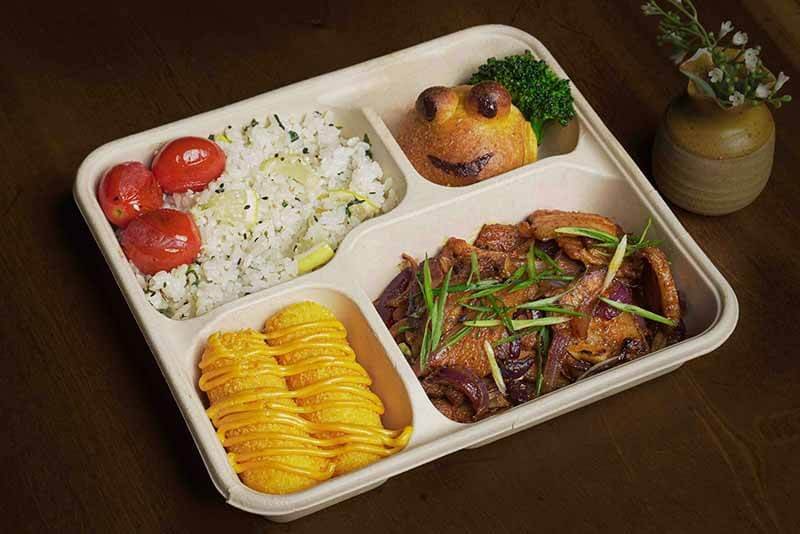
 How to Choose the Right Biodegradable Food Packaging?
If you are going to use or purchase biodegradable packaging for food, whether it’s for home use, takeout, catering, or retail, here are the key factors you need to consider before purchasing.
Material and Certification
Because biodegradable materials contain many specific materials, you need to choose your desired material first, then check the certification standard, such as EN 13432 or ASTM D6400. The word “biodegradable” alone does not necessarily mean that the food packaging is biodegradable.
Usage
Biodegradable food packaging material can be made in different forms, such as disposable food containers, disposable food boxes, disposable food bowls, disposable food plates, disposable cups, disposable food trays, disposable films, disposable food bags, etc. So, which one fits your food needs? Choose the proper type.
Additionally, whether your food is dry food, contains liquids, sauces, or oil, and whether it needs to be heated in a microwave or refrigerated, will all influence your choice of disposable biodegradable food packaging.
Local Disposal Infrastructure
Local waste management facilities are also a crucial factor to consider. For example, the availability of industrial composting facilities, recycling facilities, or waste sorting management in your area will influence your choice of biodegradable food packaging. Otherwise, environmental benefits are meaningless.
Cost, Performance, and Sustainability Goals
The cost of biodegradable food packaging varies depending on the materials used. Their performance also differs depending on the materials. Whether the biodegradable packaging material you choose aligns with your brand values will also influence your decision.
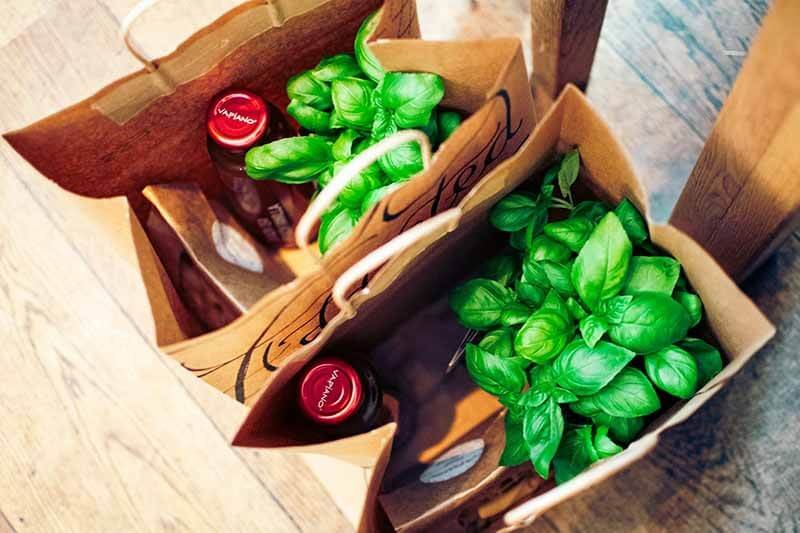
Biodegradable Packaging vs Traditional Plastics
| Compare Item | Traditional Plastics | Biodegradable Packaging |
| Material Resource | Fossil Based (Petroleum) | Renewable (Plant-based Fibers, Bioplastics) |
| End of Life | Recycled / Landfill / Ocean Pollution | Industrial Compost / Biodegradation |
| Chemical Additives Risk | Higher (Stabilizers, Plasticizers) — May Leach Chemicals into Food/Environment | Lower (Natural Fibers / Bioplastics) — Lower Risk If Properly Processed |
| Performance | Strong Barrier, Heat Resistance, Durability | Variable — Often Weaker Barrier or Lower Heat Resistance, Depends on Material |
| Environmental Footprint | High: Long-term Waste, Microplastics, Pollution | Lower (Renewable Origin, Potential Compost) — But Depends on Disposal Infrastructure and Behavior |
| Cost | Low | Higher Material / Manufacturing Cost |
The Misconception About Biodegradability
There are many details about the concept of biodegradability that are often misunderstood. Below, we will clarify some common misunderstandings.
Misconception: All bioplastics are biodegradable.
Truth: No, not all bioplastics are biodegradable.
Misconception: All biodegradable materials are compostable.
Truth: No. Not all biodegradable materials are compostable, please check here
Misconception: Biodegradable packaging can break down naturally anywhere.
Truth: No, it depends on the specific material. Landfills typically lack the oxygen needed for rapid decomposition, so decomposition is slow and may even produce harmful gases. Similarly, in the ocean, materials often fail to decompose, turning into tiny microplastics that also harm the environment and marine life.
Misconception: If the packaging material is biodegradable, it can be discarded at will.
Truth: No, this is absolutely unacceptable. Even biodegradable food packaging requires a suitable environment and treatment to decompose. Improper handling will prevent it from decomposing quickly, or even completely.
Misconception: Biodegradable food products are a complete solution to plastic pollution.
Truth: Using biodegradable packaging only addresses one part of the plastic pollution problem, as the facilities used to break down these materials are also crucial. Without proper handling, even the use of biodegradable materials cannot achieve the desired environmental benefits.
Where to Wholesale Biodegradable Food Packaging?
Eco March is the manufacturer of various kinds of biodegradable packaging for food, it includes regular disposable food containers and customized biodegradable packaging. Contact us to get a wholesale price today!
FAQ
Q: Does biodegradable packaging always degrade quickly??
A: No, the rate of decomposition depends on the specific materials, microbial conditions, oxygen, moisture, temperature, and treatment methods.
Q: Is biodegradable packaging safe for hot food or oily meals?
A: It depends on the specific material. Such as the sugarcane fiber packaging is suitable for hot and oily foods.
Q: How long does biodegradable food packaging take to break down?
A: This depends on the specific materials and environmental conditions. If handled properly, it can generally decompose completely within 6 months.
Q: Can biodegradable food packaging come into direct contact with food?
A: Yes. Certified biodegradable food packaging can contact with food directly.
Q: Does biodegradable packaging cost more?
A: Yes, biodegradable packaging be slightly more expensive than traditional plastic. However, as demand increases, prices continue to decline.
Q: Is biodegradable packaging microwave-safe?
A: This is depend on specific materials. Such as, bagasse containers is 100% microwave-safe, but PLA containers are not microwave-safe. Always check the product labels.
John Q
John Q is Eco March’s Product Manager. With 5 years of prior experience in the food industry after graduating from university, he has been an integral part of Eco March. He excels in creating and developing eco-friendly food packaging products with a keen focus on enhancing the consumer experience.


