
The Complete Guide to Clamshell Containers
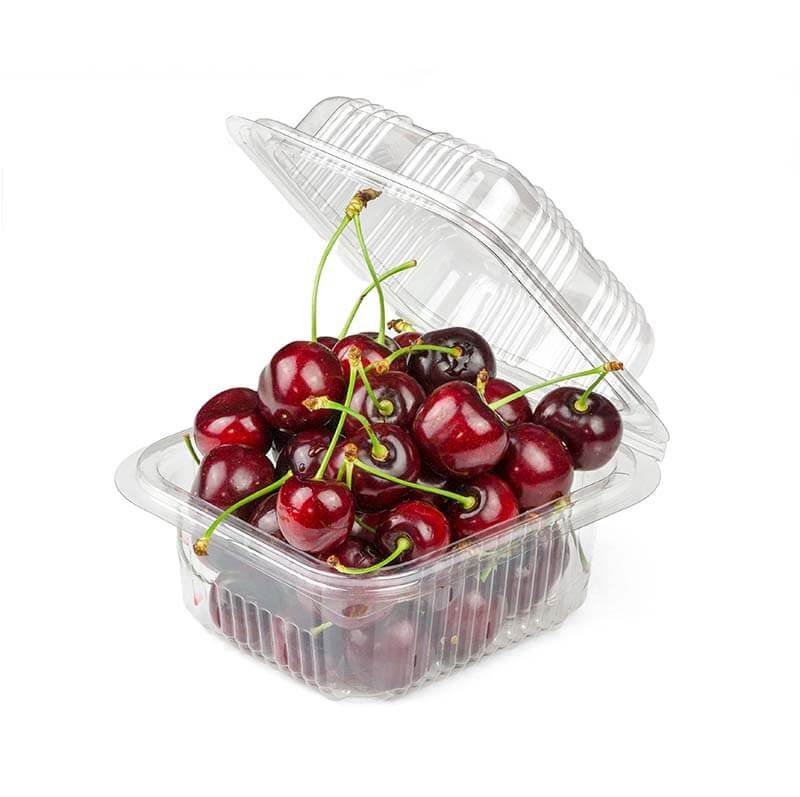
In the food packaging industry, clamshell containers are almost ubiquitous. From fresh fruits, vegetables, and salads sold in supermarkets, to desserts and snacks in dessert shops, to sandwiches and various takeout meals sold in restaurants, you can find them everywhere. This is enough to demonstrate that the convenience, flexibility, protection, and visibility of clam shell containers provide perfect service to customers who use them. Today, we will explore this packaging from various aspects, which will be absolutely beneficial for your understanding and wholesale clamshell packaging.
What Are Clamshell Containers?
Clamshell container is a packaging format that container and lid are connected by a hinge. This packaging material is mainly for food packing and can also be used for packing electronics, toys, hardware, cosmetics, and personal care items.
Materials & Types of Clam Shell Container
Clamshell containers come in various materials, each of them are different in transparency, recyclability, environmental impact, heat/food suitability, and cost. Now, let’s take a look at the details.
Plastic Clamshell Containers
There are 2 common types of plastic clamshell containers for food service.
PET Clamshell Containers
This food container is clear, strong, and widely used for fruit, vegetables, salads, and deli items. Good visibility and shelf appeal. Waterproof, oil-proof, refrigerator-friendly, not heat-resistant, not microwave-safe.
PP Clamshell Containers
This container is generally supplied in clear and black colors, used for packing food. This PP Clamshell container is waterproof, oil-proof, freezer-friendly, and microwave-friendly.
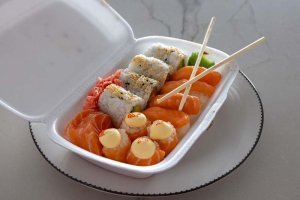
PS / Foam / EPS Clamshell Containers
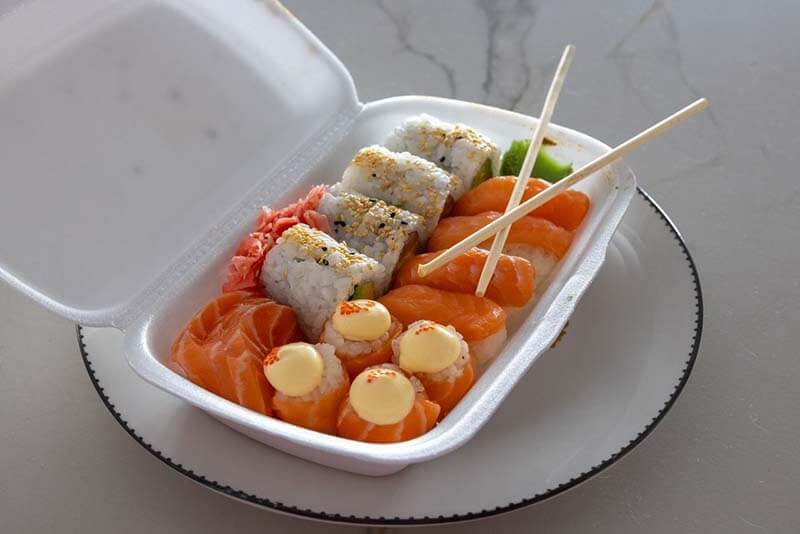
The clamshell container made from PS, foam, and EPS is less common now, since this material is not friendly to our environment and recycling system. Many regions and countries are phasing out this material. But, we have to say, the cost of this container made from this material is very cheap, and its heat insulation performance is also very good.
Biodegradable Clamshell Containers
The commonly used biodegradable clamshell containers are bagasse clamshell containers, paperboard clamshell containers, and PLA clamshell containers.
Bagasse Clamshell Containers
Made from bagasse. If sustainability or compostability is your first priority, bagasse clamshell containers are your first choice. They are strong and durable, waterproof, oil-proof, freezer-friendly, and microwave-friendly. Its cost also decreased as demand increased.
Paperboard Clamshell Containers
Paperboard Clamshell containers are one of the eco-friendly choices, but this material is less durable than bagasse, it has poor moisture resistance, not suitable for serving liquid foods.
PLA Clamshell Containers
The PLA clamshell containers are made from plant-based bioplastic, which is compostable and more environmentally friendly. It has clear visibility like plastic, and also waterproof, oil proof, freezer friendly, but not microwave friendly
Why Clamshell Containers Are So Popular?
As we mentioned at the beginning of this blog, the clamshell containers are so popular. Here is the reason:
High Visibility
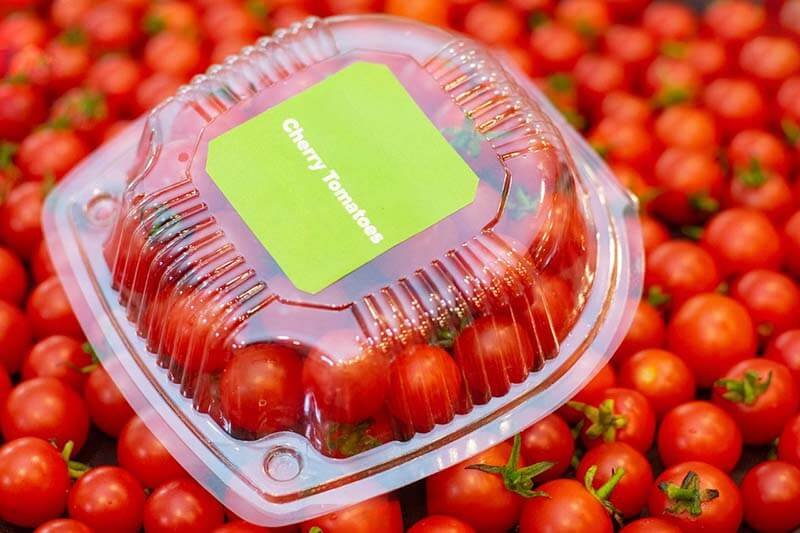
Most of the clamshell food containers are transparent, such as plastic material, PLA. Such kind of food containers allow customers to see the food inside without opening it. This visibility helps consumers to assess food freshness, portion, and appearance.
As retailers, such visibility can help you catch customers’ attention, such as colorful salads and neatly arranged pastries.
Protection & Safety
Rigid clamshell containers provide strong protection to the food during transport, storage, and handling.
Most of the food clamshell containers can be sealed or have tamper-evident closures, which tell customers the food inside has not been tampered with. This is especially important for the pre-packaged food, deli products, or ready meals.
For the seller, such packaging can reduce returns and complaints caused by packaging damage or food contamination.
Convenience
Clamshell food container is light in weight and always stackable, this is convenient to store in the refrigerator, warehouse, and delivery boxes. This is very valuable for the retailers, take-out restaurants, and meal-prep services.
The design of food clamshell packaging is easy to assemble and fill, with no need for any tape or adhesives. This could reduce packaging time.
For consumers, clamshell take out containers are easy to carry and allow re-closing after opening. This is very useful for takeout or on-the-go meals.
Versatility
The clam shell food containers can be produced in different sizes and shapes, suitable for packing various foods, such as berries, salad, cut fruit, ready-to-eat meals, sandwiches, pastries and baked goods, deli meats and cheeses, snacks, and more. This wide applicability makes it the first choice for many food categories.
High Cost Performance
The huge market demand for clamshell boxes has significantly reduced manufacturing costs, thereby lowering costs for restaurants, retailers, and food producers.
Keep Food Hygienic & Fresh
Most clam shell packaging has rigid sealing and protective structure, which helps keep the food fresh and reduces contamination risk.
The material used to produce clamshell container is moisture-resistant and grease-resistant, which helps to reduce the risk of leaks.
How Clamshell Containers Are Made?
Here, we will introduce the production process for plastic clamshell containers and bagasse clamshell containers.
Plastic Clamshell Containers
Thermoforming is the primary method used to manufacture plastic clamshell containers because it is fast, efficient, and highly customizable. The production process is as follows:
Creating Plastic Sheet
- Food-grade PET or PP pellets are melted in an extruder.
- The molten material is pushed through a die to form a continuous, uniform sheet.
- The sheet is cooled, rolled, and precisely controlled for consistent thickness.
Heating, Forming & Shaping Clamshell
- The plastic sheet is reheated until pliable.
- Vacuum forming pulls the sheet onto the mold; pressure forming adds air pressure for sharper details.
- Precision molds define the container’s size, shape, hinge, and locking features.
Trimming & Finishing Container Edge
- Formed clamshells are trimmed from the sheet.
- Edges are smoothed, hinges defined, and locking tabs ensured to close securely.
- Excess material is collected and recycled back into production.
Bagasse Clamshell Containers
The bagasse clamshell containers come from the sugarcane waste. Let’s take a look at how they can produce to a food container.
Collection & Preparation of Raw Material
- Bagasse fibers are collected from sugar mills.
- Fibers are cleaned to remove dirt, sugar residue, and impurities.
Turning Fibers into Slurry
- Cleaned fibers are mixed with water.
- The mixture is mechanically broken down into a uniform pulp slurry.
- Excess impurities are filtered out.
Forming / Molding the Shape
- Pulp is deposited into a forming mold shaped like the clamshell.
- Vacuum suction pulls fibers tightly against the mold surface.
- Excess water drains through micro-perforated molds.
Hot-Pressing (Heat + Pressure)
- High temperature + pressure compress the shape.
- Water is removed rapidly.
- The structure becomes firm, smooth, and rigid.
Drying & Curing
Depending on factory setup, drying may involve:
- Hot-air ovens
- Chamber drying
- Continuous conveyor drying
Trimming & Edge Finishing
- Laser cutters or steel dies trim excess fiber.
- Edges are smoothed.
- Hinges and closure features are refined.
How to Choose Clamshell Food Containers for Your Business?
As we mentioned, the clamshell containers can be used for various foods that come from different businesses. Here, you can check our recommended clamshell type for your food.
Fresh Produce / Salad / Fruit / Deli
- Recommended Type: PET / PLA clamshell container
- Recommendation Reason: High transparency, good visibility, protects from damage, and the consumer can inspect the produce before purchase
Takeout / Ready-to-eat meals (Cold or Room Temp)
- Recommended Type: PET / PP / PLA / Bagasse
- Recommendation Reason: Rigid protection, convenience, easy stacking/transport, resealable, and possible
Hot Meals / Cooked Food
- Recommended Type: PP / Bagasse clamshell containers
- Recommendation Reason: Excellent heat resistance, water resistance, and oil resistance.
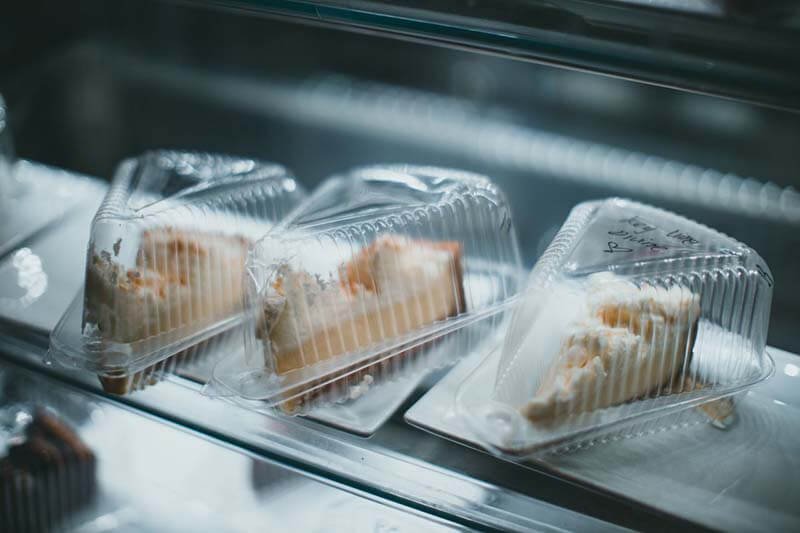
Pastries / Bakery / Snacks / Dry food
- Recommended Type: PET / PLA / Bagasse
- Recommendation Reason: Visibility for display, adequate protection, and sustainability are possible
Retail Shelf Packaging / Branded Products
- Recommended Type: PET / PP / PLA
- Recommendation Reason: Good visibility boosts sales, sturdy protection, standardization, and brand presentation
Where to Buy Clamshell Containers?
Eco March is the manufacturer of clamshell food containers in China. We provide various kinds of compostable food containers to different food suppliers. Whether you run a food business or a retail operation, contact us to get wholesale price.
John Q
John Q is Eco March’s Product Manager. With 5 years of prior experience in the food industry after graduating from university, he has been an integral part of Eco March. He excels in creating and developing eco-friendly food packaging products with a keen focus on enhancing the consumer experience.


